
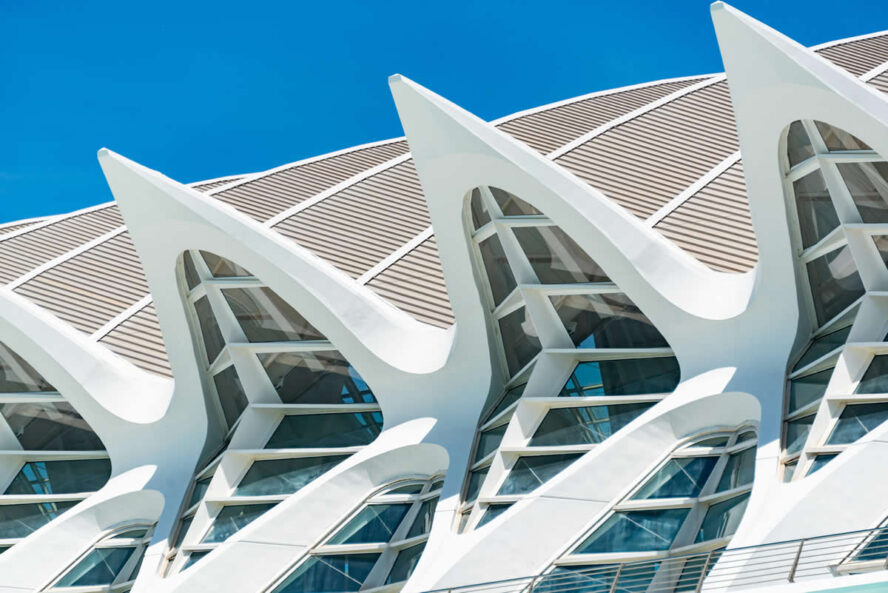
New European Bauhaus Facility 2025-2027 transforms Europe through sustainable design, cultural heritage, and inclusive innovation.
The New European Bauhaus Facility 2025-2027 is a new and unique funding tool for the New European Bauhaus (NEB). It is an initiative of the European Union that fosters the development and scaling up of innovative solutions for the transformation of neighbourhoods to become not only sustainable, but also inclusive and beautiful.
The NEB Facility 2025-2027 represents the European Union’s ambitious commitment to blend design, sustainability, and inclusivity. This initiative connects the European Green Deal to our living spaces and experiences. The Facility serves as the financial backbone for implementing NEB projects across Europe. These projects aim to transform how we live, work, and interact with our environments.
Origins and Early Development
The Birth of a Vision (2020-2021)
The New European Bauhaus initiative began in October 2020. European Commission President Ursula von der Leyen introduced it during her State of the Union address. She called for a “new cultural project for Europe” that would bring the European Green Deal to life in tangible ways.
The initiative draws inspiration from the original Bauhaus movement founded by Walter Gropius in 1919. That movement revolutionized architecture and design with its philosophy of merging art with everyday function. Similarly, the New European Bauhaus aims to merge sustainability with style.
During its initial co-design phase, the Commission invited citizens, experts, businesses, and institutions to contribute ideas. This phase generated thousands of contributions from across Europe.
From Concept to Reality (2022-2024)
In 2022, the New European Bauhaus moved from concept to implementation. The Commission announced the first NEB projects with €85 million in funding for 2021-2022. These pioneering projects established the practical framework for what would become the NEB Facility.
By 2023, the initiative had gained significant momentum. Several flagship projects demonstrated early success. For instance, the renovation of public housing in Västerås, Sweden incorporated sustainable materials while preserving cultural heritage. Another example is the community-designed public spaces in Porto, Portugal that combined flood protection with recreational areas.
In 2024, the European Commission announced expanded funding. They committed to a more structured approach through the creation of the NEB Facility 2025-2027.
The NEB Facility Structure and Operation
Funding Framework
The NEB Facility 2025-2027 operates with a total budget of €310 million. This represents a substantial increase from previous funding phases. The European Commission allocates these funds through various mechanisms:
- Direct grants (45% of total funding)
- Co-financing partnerships (30%)
- Technical assistance programs (15%)
- Innovation prizes and competitions (10%)
The increased funding reflects the growing importance of the NEB initiative in EU policy[1][4].
Governance Model
The NEB Facility operates under a multi-tiered governance structure:
- NEB Steering Committee: High-level direction from Commissioners responsible for regional policy, innovation, culture, and climate action.
- NEB Executive Board: Day-to-day management by appointed experts from relevant fields.
- NEB Lab: An innovation hub that tests new approaches and methodologies.
- NEB Community: A network of participants, including organizations and individuals contributing to the initiative.
This structure ensures both political guidance and practical expertise in implementing projects.
Key Focus Areas
The NEB Facility 2025-2027 concentrates on three fundamental values:
1. Sustainability
Projects must demonstrate environmental benefits through:
- Circular economy principles
- Carbon reduction strategies
- Climate adaptation measures
- Biodiversity preservation
For example, the EcoQuartier project in Lyon, France integrates solar power, rainwater harvesting, and urban farming into affordable housing developments.
2. Aesthetics
The NEB emphasizes quality experiences through:
- Cultural heritage preservation
- Creative design solutions
- Artistic expression in public spaces
- Beauty in functionality
The revitalization of the Manifattura Tabacchi in Florence, Italy exemplifies this approach by transforming an industrial complex into a creative hub while preserving its architectural significance.
3. Inclusion
Projects must ensure benefits reach all community members through:
- Accessibility features
- Affordability measures
- Participatory design processes
- Intergenerational considerations
The “Everyone’s Neighborhood” program in Helsinki demonstrates this principle by involving residents of all ages and backgrounds in redesigning communal spaces.
Major Projects and Initiatives
Flagship Developments
Several landmark projects represent the NEB Facility’s vision:
The Green Bridges Network
Spanning across 12 European cities, this project connects urban areas with nature corridors. Construction began in early 2025 with completion expected by 2027. The project will establish green infrastructure that doubles as pedestrian and cycling paths.
Renovation Wave Demonstrators
These projects showcase energy-efficient renovations in different climate zones. From Baltic apartment blocks to Mediterranean village restorations, each demonstrator adapts NEB principles to local conditions.
Digital Commons Platform
Launched in March 2025, this online resource shares designs, methodologies, and case studies from NEB projects. It functions as an open-source library for sustainable architecture and urban planning.
Innovation Programs
The NEB Facility supports several cutting-edge programs:
Materials Innovation Lab
Based in Delft, Netherlands, this laboratory develops and tests sustainable building materials. They recently created a carbon-negative concrete alternative using agricultural waste.
Climate Adaptive Design Network
This collaboration between universities across Europe develops designs for areas facing climate risks. Their solutions address issues from coastal flooding to urban heat islands.
Social Housing Transformation Initiative
Working with public housing authorities, this program retrofits existing buildings with sustainable technologies while improving quality of life for residents.
Key Organizations and People
European Institutions
European Commission DG REGIO
The Directorate-General for Regional and Urban Policy oversees the NEB Facility’s implementation. Commissioner Elisa Ferreira has been instrumental in connecting NEB to cohesion policy funding.
European Investment Bank (EIB)
The EIB provides financial support for larger NEB projects. Their “Smart Cities, Smart Design” financing package specifically targets NEB initiatives.
Joint Research Centre
The JRC provides scientific evidence for NEB project design and evaluation. Their sustainability assessment tools help quantify project impacts.
Partner Organizations
Architecture Council of Europe
This professional organization helps implement NEB standards in architectural practice. Their President, Sofia Mannheim, serves on the NEB Executive Board.
Climate-KIC
Europe’s largest climate innovation initiative partners with the NEB to accelerate sustainable solutions. They provide technical expertise and startup support.
Europa Nostra
This heritage organization ensures NEB projects respect and enhance cultural identity. Their expertise helps balance innovation with preservation.
Key Individuals
Francesca Bria
As Chair of the NEB Executive Board since 2024, Bria guides strategic direction. Her background in digital innovation shapes the NEB’s approach to smart city integration.
Thomas Rau
This renowned architect serves as NEB Special Advisor for Circular Economy. His “material passport” concept influences NEB standards for building materials.
Mariana Mazzucato
This economist helped design the NEB Facility’s funding model. Her “mission-oriented” approach to public investment shaped the initiative’s implementation strategy.
Implementation Challenges
The NEB Facility faces several challenges in fulfilling its mission:
Regulatory Harmonization
Building codes and environmental regulations vary across EU member states. The Facility works to align these frameworks without imposing excessive uniformity. The “Flexible Standards” approach allows adaptation to local contexts while maintaining core principles.
Scaling Impact
Early NEB projects often remained at demonstration scale. The Facility now focuses on replication and expansion. Through the “Scale-Up Pathway,” successful pilots receive additional funding for broader implementation.
Skills Development
The construction and design sectors face skills gaps in sustainable practices. The NEB Skills Coalition, launched in January 2025, addresses this through training programs and professional certifications.
Public Engagement
Technical aspects of sustainability can seem distant from daily concerns. The “Beautiful, Sustainable, Together” campaign translates NEB principles into relatable benefits for citizens.
Success Stories
Several early achievements demonstrate the NEB Facility’s potential:
Reimagining Rural Spain
In Extremadura, Spain, the “Villages of Tomorrow” project revitalized five depopulated rural communities. Through renewable energy installations, digital connectivity, and innovative housing designs, these villages attracted new residents and businesses. Population has increased by 15% since project implementation.
Transforming Industrial Legacy
In Katowice, Poland, former coal mining facilities transformed into a clean energy demonstration campus. The project preserved industrial heritage while creating spaces for education and green technology businesses. It now hosts over 50 companies employing former mining workers.
Community-Led Urban Regeneration
In Marseille, France, the “Neighborhood Co-Design” initiative empowered local residents to reimagine public spaces. Through participatory budgeting and design workshops, communities created gathering places reflecting local cultural diversity while incorporating sustainable features.
Looking Forward
The New European Bauhaus Facility 2025-2027 stands at a pivotal moment in Europe’s sustainable transformation. As climate challenges intensify, the initiative’s integrated approach becomes increasingly relevant. The coming years will determine whether this ambitious vision can scale effectively across diverse European contexts.
Several developments will shape the initiative’s future trajectory:
The planned mid-term evaluation in 2026 will assess progress and potentially adjust priorities. Early indicators suggest strong performance in urban areas, with greater challenges in rural implementation.
Cross-border collaborations are expected to increase, with the “Bauhaus Without Borders” program launching in late 2025. This will connect regions facing similar challenges across national boundaries.
Integration with other EU instruments, particularly the Recovery and Resilience Facility, will maximize impact. The “Green Deal Matrix” tool, currently in development, will help align funding streams.
Ultimately, the NEB Facility’s success will be measured not just in buildings constructed or spaces redesigned, but in cultural transformation. By making sustainability beautiful and inclusive, the initiative aims to change how Europeans perceive and create their built environment. This legacy may prove more enduring than any physical structure.
The words of Commission President von der Leyen at the 2024 NEB Festival capture this aspiration: “We are not just building sustainable structures—we are building sustainable communities. The New European Bauhaus is both a physical reality and a state of mind.”
Through continued innovation, collaboration, and community engagement, the NEB Facility 2025-2027 works toward this vision of a Europe where sustainability, beauty, and inclusion shape every aspect of our shared spaces.
Sources and Further Reading
- European Commission. (2025). “New European Bauhaus Facility 2025-2027” European Commission Official Website.
- von der Leyen, U. (2020). “State of the Union Address.” European Commission Press Corner.
- European Commission. (2023). “New European Bauhaus: Beautiful, Sustainable, Together.” Official NEB Portal.