
Europe – Fashion Associations
Directory: Fashion Associations, Federations, Councils, and Organizations across Europe
These associations represent Europe’s textile, leather, footwear, and fashion industries. Many advocate directly to EU institutions, while others, like the European Fashion Council, connect national fashion weeks across the continent.
EU Textile and Clothing Trade in 2025-2026
The EU textile and clothing sector generates €166 billion in annual turnover, employing 1.2 million people across nearly 200,000 companies. Even so, the industry has now contracted for three consecutive years.
Exports declined 2.9% and employment fell 2.8% in the latest reporting year, according to EURATEX. Imports reached €122 billion, more than double the sector’s €61 billion in exports, widening the EU’s trade deficit further.
Low-cost e-commerce is adding real pressure, too. Since 2022, low-value parcel imports have quadrupled, with average prices under €9 per item, creating an uneven playing field for European producers meeting higher environmental and social standards.
There’s a genuine bright spot, though: the sector’s carbon emission intensity has fallen sharply, from over 160 grams per euro of value added in 2008 to just 66 grams in 2024. For wholesale buyers and sourcing professionals, that combination, contracting volumes alongside real sustainability gains, is worth watching closely over the next few seasons.
European Fashion Council
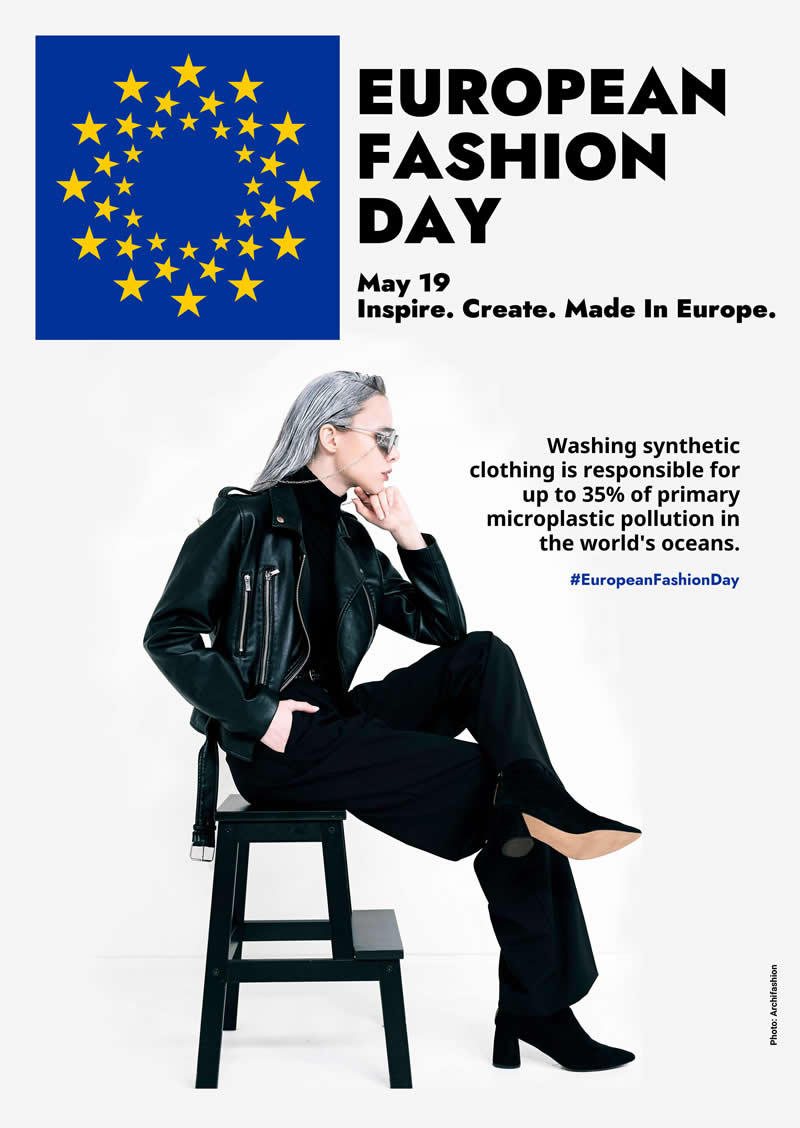
Established on 18-19th of May 2007 in Ancient Plovdiv, Bulgaria.
The European Fashion Council (EFC), as the official NGO representing fashion, fashion design, and European Fashion Weeks, unites 29 member states across Europe. This includes 18 EU member countries: Austria, Belgium, Bulgaria, Czechia, Denmark, Estonia, Finland, Germany, Hungary, Ireland, Italy, Latvia, Malta, Netherlands, Portugal, Romania, Spain, and Sweden. It also comprises 2 European Economic Area (EEA) member countries, Iceland and Norway, as well as Switzerland. Additionally, EFC includes 8 other European nations: Albania, Armenia, Bosnia and Herzegovina, North Macedonia, Moldova, Montenegro, Serbia, and Ukraine.
Read more →
Directory: In Alphabetical Order
COTANCE
The Confederation of National Associations of Tanners and Dressers of the European Community (COTANCE) is the representative body of the European Leather Industry. It is a non-profit organization established in order to promote the interests of the European tanning industry at international level. Apart from representing European tanners and dressers, it also has the mission of promoting European leather both in the European and international markets.
> cotance.com
EuroCommerce
Established in 1993, EuroCommerce represents the retail, wholesale and international trade sectors in Europe. Its membership includes commerce federations in 31 countries, European and national associations representing specific commerce sectors and individual companies.
Its mission is to:
-promote the visibility and defend the interests of commerce in the European Institutions, ensuring that they understand and take into account the concerns and realities of the sector throughout the decision-making process;
– raise awareness among EU decision makers of the importance of commerce in the European economy;
– improve the quality of legislation so as to reduce costs and uncertainties for businesses;
– keep its members informed of EU developments impacting on their daily activities.
> eurocommerce.eu
European Apparel and Textile Confederation (EURATEX)
As the voice of the European textile and clothing industry, EURATEX’s main objective is to create an environment with in the European Union which is conducive to the manufacture of textile and clothing products. Its headquarters in Brussels are within touching distance of the major decision-making bodies of the EU, at Commission, Parliament and Council level. In this context, the major areas of concern to EURATEX are to foster a new framework for textile & clothing trade policy, to promote a further expansion of the EU exports of textiles and clothing, to promote legislation and its application in the field of intellectual property, to support measures which enhance environmental protection but which are at the same time acceptable to the industry, to promote and participate in research, development, innovation and other educational or social projects which bring value added to the industry at European level, to engage in a constructive social dialogue at EU level with our social partners, and to disseminate economic and statistical data to the membership.
> euratex.eu
European Composites Industry Association (EuCIA)
EuCIA is the leading Brussels based Association of the European Composites Industry. Its main mission is representation of National Composites Associations and industry specific sectors targeting end-segments sectors or potential product groups or processes at EU level.
EuCIA is the Brussels – based leading Association of the European Composites Industry, representing European National composite Associations as well as industry specific Sector Groups, such as those targeting end segments like automotive or those promoting particular product groups or processes.
> eucia.eu
European Confederation of the Footwear Industry
The CEC, or the European Confederation of the Footwear Industry, is the representative body of the European footwear industry. It advocates for the sector’s interests at both European and international levels, aiming to promote the competitiveness and sustainable growth of footwear companies.
> cec-footwearindustry.eu
European Disposables and Nonwovens Association (EDANA)
EDANA is the international association serving the nonwovens and related industries.
EDANA provides a comprehensive range of services and supplies its members with the information and data necessary for them to enhance the industry goals and performance.
Formed in 1971 originally as the European Disposables and Nonwovens Association, for more than three decades EDANA has grown and evolved, to become today a modern industry association with a European focus and global influence and profile, reflecting the changing dynamics of the nonwovens industry.
Today, unifying the diversified interests of over 220 member companies in a unique vertically integrated structure along the supply chain, EDANA is the single, powerful Voice of Nonwovens, representing, protecting and actively promoting the common interests of nonwovens and their related industries throughout the world, with a particular focus on Europe, Middle East and Africa.
> edana.org
European Fashion Alliance
The European Fashion Alliance (EFA) is a membership based alliance founded in 2022 in which international fashion and textil organisations share experience and drive change in their sector. EFA empowers the fashion industry, its stakeholders and their activities, entrepreneurial creativity and innovation skills through advocacy and communication of the alliance of European Fashion Councils and like-minded organisations.
> europeanfashionalliance.org
European Man-Made Fibres Association / International Committee for Rayon and Synthetic Fibers (CIRFS)
CIRFS: European Man-Made Fibres Association is the representative body for the European man-made fibres industry.
Europe is the world’s second largest producer of man-made fibres – an essential raw material for many other industries, ranging from textiles to aerospace, from baby diapers to renewable energy. It is a global leader in quality, innovation and Sustainability.
CIRFS was founded in 1950, as the Comité International de la Rayonne et des Fibres Synthétiques (from which the abbreviation CIRFS is derived). It took on its present name in 2009.
> cirfs.org
Nordic Fashion Association
Nordic Fashion Association (NFA) was inaugurated in 2008 by the five Nordic fashion organisations: Danish Fashion Institute; Helsinki Design Week; Icelandic Fashion Council; Oslo Fashion Week; and Swedish Fashion Council. The organisation has the core purpose of gathering the Nordic fashion industry and collectively embark on the process of working with, and implementing, socially responsible and sustainable principles.
The five Nordic countries are globally known for a socially responsible business manner and are often referred to as clean and ethical. Therefore, this project coheres very well with the values and image the Nordic region already has. Furthermore, the Nordic countries share a tradition of high national social and environmental standards.
By teaming up, the five Nordic countries can pool knowledge and gain critical mass and actually make a difference in terms of influencing the world’s fashion production.
nordicfashionassociation.com
Related Directories
- Fashion Associations: Global Directory — the broader directory this region sits within
- Trade Associations
- Fashion Weeks Europe — find the events several of these associations support
- Creative Industries Europe — national trade association listings by country